
Why Does My Pet Keep Vomiting? A Stepwise Diagnostic Approach
Vomiting once is a bad day. Vomiting regularly for weeks or months is a pattern, and patterns in medicine mean something. Chronic vomiting in dogs and cats can have a long list of underlying causes, including food intolerances, inflammatory bowel disease, parasites, foreign material, and hormonal disorders. Working through that list requires a methodical approach: ruling out the straightforward causes first, then moving toward more advanced diagnostics when initial steps don’t provide a clear answer.
Animal Hospital at Hillshore in Madison is a practice built around a genuine culture of caring, where thoroughness and compassion aren’t competing priorities. Our diagnostic capabilities include in-house lab work, digital radiography, and ultrasound to support a complete GI workup, and our team is known for making sure clients feel genuinely informed at every step. Contact us to get started on answers.
Chronic Pet Vomiting: Why a Systematic Approach Matters
There’s a particular kind of exhaustion that comes with weeks of unexplained vomiting. You’ve cleaned the carpet, watched your pet carefully, maybe tried switching foods, and you still don’t have answers. The uncertainty is often harder than the inconvenience.
The good news is that chronic vomiting is one of those problems where a structured, step-by-step diagnostic process reliably gets to the answer. We take the time to work through your pet’s history carefully and build a complete picture rather than reaching for the most convenient explanation. Reach out to us to talk through what you’ve been seeing and set up an evaluation.
When Is Vomiting a Reason to Call the Vet?
Not every episode of vomiting is cause for concern. Dogs eat grass and occasionally bring it back up. Cats produce hairballs as a byproduct of grooming, though frequent ones are worth mentioning at your next visit. A one-time vomiting episode in an otherwise bright, alert pet who bounced right back is generally low priority.
Persistent or recurring vomiting is a different situation. Signs that warrant a prompt veterinary evaluation include:
- Vomiting that happens more than once or twice a week consistently
- Unexplained weight loss
- Reduced energy or a general flattening of personality
- Blood in the vomit, or vomit with a dark, coffee-ground appearance
- Changes in water intake or urination frequency
- Vomiting paired with diarrhea
- Abdominal tenderness or visible swelling
These signs can indicate conditions affecting not just the GI tract but organs throughout the body. Our annual wellness exams, which include blood panels and physical assessment, help establish health baselines that make it much easier to detect changes before they escalate.
What the Vomit Itself Can Tell You
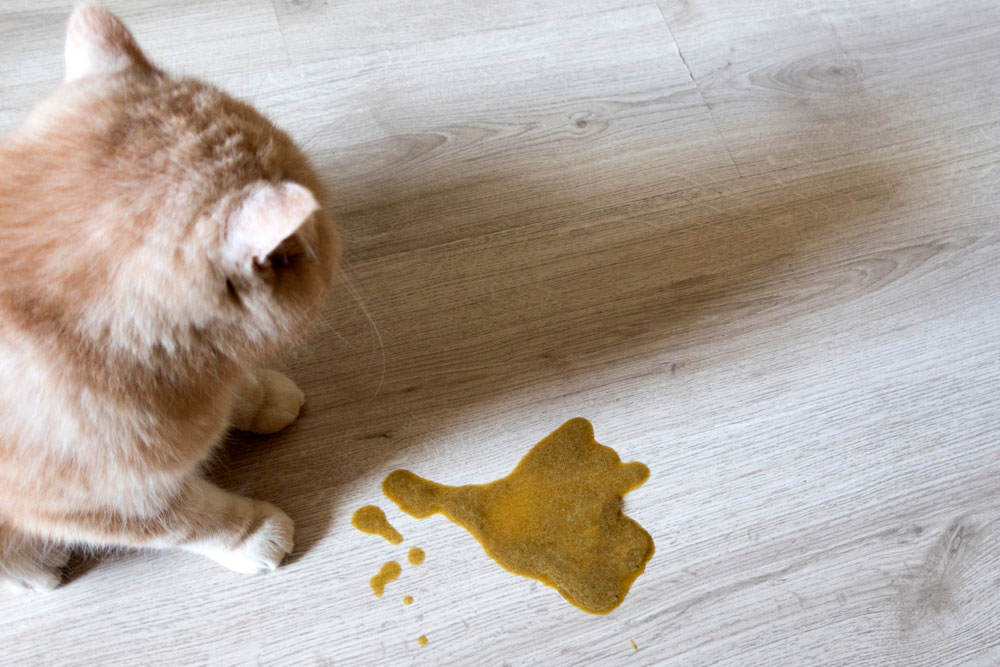
Before your appointment, it helps to note the timing, frequency, and what the vomit actually looks like. Even a photo on your phone is genuinely useful. The appearance of vomit provides real clinical information before a single test is run:
- Yellow or green bile:Often appears in the early morning before eating, and can point to acid buildup overnight, bilious vomiting syndrome, or a motility issue
- Undigested food shortly after eating:May actually be regurgitation rather than true vomiting — an important distinction, since the two have different causes and require different treatment approaches. Megaesophagus, a condition where the esophagus loses normal function, produces regurgitation rather than true vomiting. They look similar but require completely different treatment.
- Dark or coffee-ground material:Suggests digested blood in the stomach and warrants prompt evaluation
- Bright red blood:Indicates active upper GI bleeding and is always a reason to seek same-day care
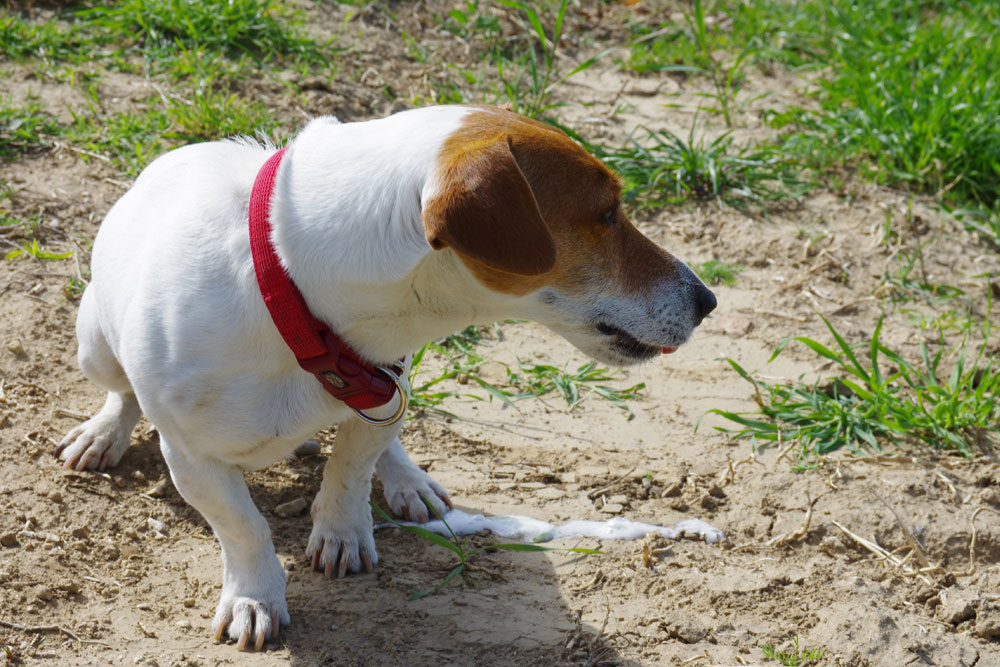
- Foamy white liquid:Commonly linked to an empty stomach or acid irritation; in large-breed dogs with unproductive retching and a visibly distended abdomen, it can be an early warning sign of bloat
When Vomiting in Pets Requires Immediate Care
Some situations call for same-day or emergency attention rather than a scheduled appointment. Contact us right away or head to the nearest emergency facility if your pet is:
- Vomiting blood or producing dark, coffee-ground vomit
- Showing abdominal sensitivity, a hunched posture, or visible distension
- Retching repeatedly without producing anything, especially in large or deep-chested breeds
- Unable to keep water down
- Severely lethargic or unresponsive alongside vomiting
- Very young or very old with any accompanying symptoms
When it comes to senior pet health, it’s always better to call earlier rather than wait. Older pets have less reserve, and what looks like mild or manageable vomiting can escalate faster than it would in a younger animal.
What’s Actually Causing the Vomiting? Common Categories to Know
Could the Food Be the Problem?
Food is a surprisingly frequent contributor to chronic vomiting, even in pets who’ve been eating the same diet for years. A food allergy involves an immune response to a specific protein like chicken, beef, or dairy. A food intolerance doesn’t involve the immune system but still produces digestive upset because the GI tract simply doesn’t handle that ingredient well. Both can develop gradually over time.
Choosing pet food thoughtfully matters, but so does consistency in what else goes in. Rotating treats, regular table scraps, and opportunistic trash exploration all create ongoing low-grade GI irritation that produces intermittent vomiting without any single obvious cause.
When the Problem Isn’t the Stomach at All
The stomach may be where the vomiting happens, but the source of the problem can be somewhere else entirely. Chronic kidney disease is one of the most important causes of persistent vomiting in cats, often accompanied by weight loss, increased thirst, and reduced appetite. As kidney function declines, waste products accumulate in the bloodstream and trigger nausea.
Liver conditions follow a similar pattern. Gall bladder disease and liver disease both can both produce vomiting as a primary symptom. Endocrine conditions round out this category: feline hyperthyroidism is extremely common in middle-aged to senior cats and frequently presents with vomiting alongside weight loss and increased appetite. Pancreatitis, inflammation of the pancreas that disrupts normal digestive enzyme function, is another important cause in both species.
Our in-house laboratory allows comprehensive blood panels to be run and interpreted quickly, which is often the most efficient first step in ruling systemic disease in or out.
Conditions That Originate in the GI Tract Itself
When the digestive tract is the actual source of the problem, the list of possibilities is longer than most owners expect.
Intestinal Causes of Vomiting
- Inflammatory bowel disease(IBD) describes a group of conditions where the gut lining becomes chronically inflamed. It’s one of the most common diagnoses in persistently vomiting cats and is frequently managed long-term with medication and diet.
- Lymphoma, particularly in older cats, deserves special mention: it can present almost identically to IBD on the surface, which is one of the reasons tissue biopsy becomes essential when initial diagnostics don’t provide a definitive answer.
Gastric (Stomach) Causes of Vomiting
- GI obstructions are an important cause of acute vomiting, but partial obstructions can produce intermittent symptoms that wax and wane for days before the cause becomes clear.
- Gastric ulcers from long-term NSAID use or ingested toxins can cause vomiting with or without visible blood.
- Bilious vomiting syndromeproduces the characteristic yellow bile vomit, typically on an empty stomach in the early morning, and is often manageable with a late-night feeding.
- Pyloric stenosis, a narrowing of the passage between the stomach and small intestine that slows food transit, appears in certain breeds and older dogs.
- Gastric cancer, while less common, is worth knowing about in older large-breed dogs; it typically presents with blood-tinged vomit, reduced appetite, and lethargy.
Distinguishing between all of these depends heavily on combining diagnostic findings with your observations about timing, frequency, and what the vomiting looks like.
Toxins and Household Hazards
Some toxins cause direct GI upset; others damage the kidneys or liver and produce secondary vomiting as those organs fail. Common hazards include lilies (acutely dangerous for cats even in small amounts), sago palms, azaleas, antifreeze, and rodenticides. Wisconsin’s long winters can mean more concentrated indoor plant exposure, which is worth keeping in mind.
If you suspect your pet has eaten something toxic, poison control should be your first call. Familiarizing yourself with common toxic plants is a reasonable precaution for any pet household. After consulting poison control, reach out to us for guidance on next steps.
What Are Two Overlooked Causes of Chronic Vomiting?
Eating Too Fast
Some pets eat with a level of enthusiasm that can only be described as competitive, and the result is food that comes right back up looking almost unchanged. This is especially common in multi-pet households or in dogs who learned early that fast eating meant more food. This is often called “scarf and barf”, and it’s a common issue.
The fix is usually mechanical: slow the process down. Interactive feeders, smaller and more frequent meals, and feeding pets separately when competition is a factor can all resolve this type of vomiting without any medical intervention.
Stress and Anxiety as Digestive Triggers
The gut and the brain are closely connected, and pets can absolutely vomit from stress. New pets, a baby, construction noise, or changes in routine can all trigger GI upset that looks identical to a medical problem. Recognizing stress and anxiety in dogs and cats often requires looking at behavior alongside physical symptoms.
For cats, feline stress can be subtle: hiding more, using the litter box differently, or becoming less interactive alongside GI changes. If vomiting seems tied to specific events or improved during calmer periods, stress may be a contributing factor worth addressing directly.
What the Diagnostic Process Looks Like
A thorough history is the foundation of any GI workup. Timing, frequency, what the vomit looks like, what and when the pet eats, and recent changes at home all help our team narrow the field before a single test is run. From there, baseline testing typically includes:
- Bloodwork:Evaluates organ function, metabolic markers, blood cell counts, and hydration status
- Urinalysis:Assesses kidney function and checks for infection, protein loss, or other abnormalities
- Fecal testing:Screens for intestinal parasites that cause chronic GI symptoms and are easy to miss without testing
- Imaging:Digital radiographs identify foreign material, gas patterns, and organ size changes; ultrasound provides real-time visualization of soft tissue structures
Our diagnostic services include in-house digital radiology and laboratory testing, with board-certified radiologist review available for complex cases. Results come back quickly, which matters when a pet has been uncomfortable for a while.
How Do Diet Trials Work for Chronic Vomiting?
How a Food Trial Works
When baseline testing doesn’t explain the vomiting, a structured diet trial is usually the next step. There are two approaches: a novel protein diet using ingredients the pet has never been exposed to, or a hydrolyzed diet where proteins are broken into fragments too small to trigger an immune response.
Strict compliance means absolutely nothing else: no treats, no table scraps, no flavored medications, no access to other pets’ food. Even a small exposure to the suspect protein can reset the trial. For GI symptoms, three to four weeks is usually sufficient to see a meaningful response. Over-the-counter “limited ingredient” foods are not appropriate for a diagnostic trial, since manufacturing cross-contamination is common enough to skew results. Our team can help with dietary recommendations as part of your pet’s care plan.
Reading the Results
Clear improvement during the trial, followed by a return of symptoms when original food is reintroduced, is strong evidence of food sensitivity. The management plan at that point is straightforward: maintain the diet that works and build household consistency around it.
If vomiting continues despite strict compliance, the trial has still provided useful information. Food sensitivity is less likely, and the investigation can shift toward primary GI disease or systemic causes with more focus and less guesswork.
When Does a Pet Need a GI Biopsy?
Endoscopy: A Camera-Guided Look Inside
Endoscopy uses a flexible camera passed through the mouth to visualize the esophagus, stomach, and upper small intestine, and to collect tissue samples from the mucosal lining. It’s performed under general anesthesia, but most patients go home the same day. Endoscopy is most appropriate when mucosal changes are suspected, when IBD or lymphoma is on the differential, or when a less invasive path to biopsy is preferred. We can coordinate specialist referrals for endoscopy when indicated.
Exploratory Surgery and Full-Thickness Samples
Exploratory surgery, or laparotomy, allows a surgeon to directly examine the abdominal cavity, assess organs visually, and collect full-thickness GI biopsies from multiple intestinal locations. It’s recommended when imaging reveals something that needs hands-on evaluation, when tissue is needed from areas a scope cannot reach, or when the depth of the sample matters for diagnosis.
Our surgery services include a wide range of soft tissue procedures, and our team will discuss which approach makes the most sense for your pet’s specific situation before any procedure is scheduled.
What Biopsies Can Tell You
The most important function of GI biopsy is distinguishing between conditions that look alike on the surface. IBD and GI lymphoma in cats can be virtually indistinguishable on imaging and physical exam alone. Biopsies identify the type of inflammatory cells present, reveal the depth and pattern of disease, detect infections, and rule out cancer. Full-thickness surgical biopsies sample the entire intestinal wall and can identify problems that endoscopic surface samples might miss entirely. Accurate diagnosis means treatment can be targeted from the start rather than cycled through trial and error.
How Is the Underlying Cause Treated?
Food Sensitivity Management
Once food sensitivity is confirmed, treatment is essentially lifestyle management. Maintaining the diet that worked during the trial, keeping household members and visitors on board, and having a plan for treats and travel are the practical pillars. In multi-pet homes, separate feeding areas help prevent cross-access.
Managing IBD Long-Term
IBD rarely responds to a single intervention. Most successful management plans combine anti-inflammatory or immune-modulating medications with dietary adjustments and sometimes probiotics to support the gut microbiome. Antibiotics are added only when the biopsy suggests a bacterial component. For cats and dogs managing chronic inflammation, acupuncture can be a meaningful complement to conventional treatment and is worth discussing as one tool in a multi-modal care plan.
When the Root Cause Is Systemic
When organ disease is driving the vomiting, treatment targets that condition directly and GI symptoms typically follow. Kidney disease management centers on hydration support, specialized diets, and medications to manage blood pressure and nausea. Hyperthyroidism in cats is addressed with daily medication, dietary therapy, or surgery. Pancreatitis management prioritizes pain control, anti-nausea support, and dietary changes to reduce pancreatic stimulation.
Our diagnostics and wellness services support ongoing monitoring from diagnosis through long-term management.
How You Can Help Us Help Your Pet
The clinical picture depends on your observations at home just as much as what we find in the exam room. One of the most useful things you can do before an appointment is keep a simple symptom log: when the vomiting happens, how often, what it looks like, what your pet ate beforehand, and any behavioral changes you’ve noticed. Even rough notes on your phone add up quickly and make each appointment more productive.
Some pets also benefit from a sensitive stomach diet or probiotics to support the gut microbiome alongside medical management. If you’re unsure what to try in the meantime or have questions between appointments, chat with our team and we’ll point you in the right direction.
Frequently Asked Questions About Chronic Vomiting in Pets
When does vomiting become an emergency?
Vomiting that includes blood, happens alongside collapse, extreme lethargy, or abdominal swelling, or continues to the point where your pet cannot keep water down warrants immediate veterinary attention. Call us at (608) 238-3139 during clinic hours for guidance.
What’s the difference between vomiting and regurgitation?
Vomiting involves active abdominal contractions and usually produces digested or partially digested material. Regurgitation is passive: food comes back up shortly after eating, often undigested, without the effort of true vomiting. The distinction matters because conditions like megaesophagus cause regurgitation, not vomiting, and the treatment approach is completely different.
Can food allergies develop suddenly after years without problems?
Yes. Food allergies develop from cumulative exposure, meaning a pet can eat the same food for years and then develop a sensitivity to a protein that was never a problem before. A sudden onset of GI symptoms in an otherwise stable pet is a legitimate reason to explore food sensitivity, even without any recent diet changes.
A Clear Path Forward for Your Vomiting Pet
Chronic vomiting is one of the more draining problems to manage as a pet owner, partly because the uncertainty can go on longer than it should. The reassuring reality is that a structured diagnostic approach gets to the answer in most cases, and most pets feel meaningfully better once treatment is matched to the right diagnosis.
We approach every vomiting case with the same thoroughness and care we bring to all of our patients. From baseline diagnostics through diet trials and advanced procedures, we’re here to follow a case all the way through to answers. Schedule an appointment to start figuring out what’s actually going on with your pet- and stop cleaning your rugs so often.




Leave A Comment