
Body Condition Score for Dogs and Cats: How to Score Your Pet and Why It Matters
Stepping your pet onto the scale at the vet clinic gives you a number, but that number alone does not tell you whether your pet is at a healthy weight. A muscular 80-pound Labrador and a soft, sedentary 80-pound Labrador can look and feel completely different, even though the scale reads the same. Body condition scoring (BCS) is the tool veterinarians use to assess whether your pet is carrying the right amount of fat and muscle for their frame, and it is something you can learn to do at home between visits.
At Animal Hospital at Hillshore, evaluating body condition is part of every wellness and preventive care visit because catching weight changes early prevents bigger health problems down the road. Our team can show you exactly how to feel for your pet’s ribs, assess their waistline, and use that information to keep them healthy at every life stage. Reach out to our team to schedule a wellness visit or a body condition assessment for your pet in Madison.
Why the Scale Isn’t the Whole Story
Muscle health matters as much as total weight. Muscle is denser than fat, meaning a lean, well-conditioned pet can weigh more than a softer, less active pet of the same breed. A fit Border Collie and a healthy Bulldog look completely different at similar weights. A show-ring appearance is also not always the same as what is functionally healthiest for joints and longevity.
Body condition scoring evaluates fat and muscle together to produce a meaningful assessment of your pet’s actual health status, not just their mass.
How Do You Assess Body Condition at Home?
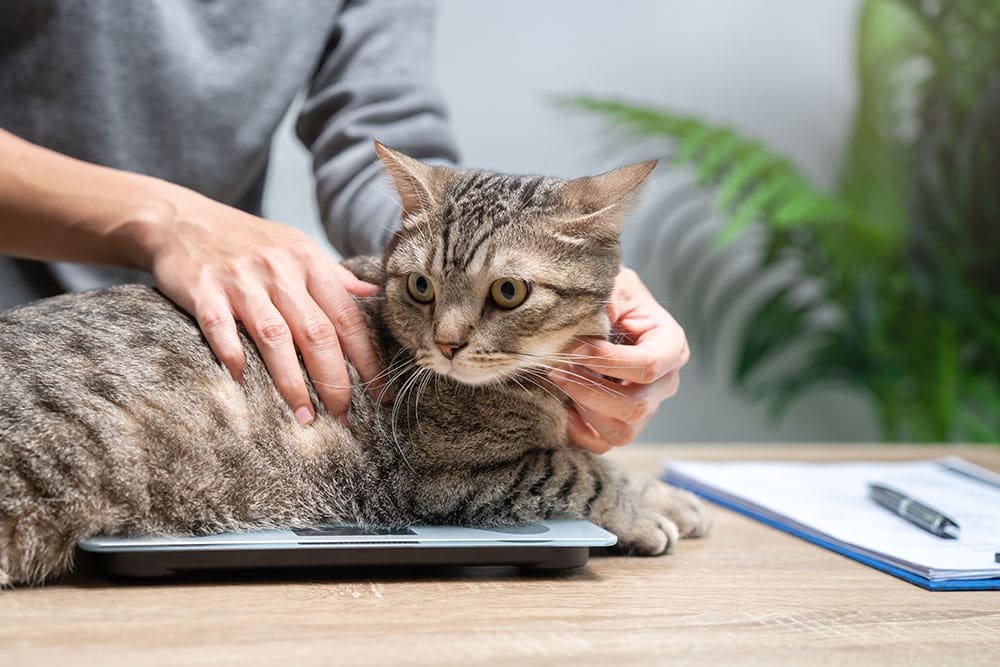
Assessing body condition at home takes about two minutes and relies mostly on your hands rather than your eyes. Feel the ribs, look at the waistline from above, check the tuck from the side, and feel for fat deposits around the tail base and shoulders.
This is a hands-on technique. Your eyes alone won’t catch everything, especially with fluffy or dense-coated breeds.
Step 1: Feel the ribs. Place your hands lightly along the sides of the chest, thumbs along the spine. Without pressing hard, slide your fingers across the ribcage. You should be able to feel each rib distinctly with gentle pressure, similar to running your fingers across the back of a loosely closed fist.
Step 2: Look from directly above. A visible waist should narrow behind the ribcage. No waist visible from above suggests excess weight. A dramatic tuck suggests underweight.
Step 3: Look from the side. The abdomen should tuck upward behind the chest, not hang level with it.
Step 4: Feel for fat deposits. Run your hands along the spine, at the tail base, and behind the shoulders. Soft fat pads in these areas indicate excess body condition.
Do this monthly. Wisconsin winters and heavy coats can make visual changes easy to miss, and regular hands-on checks are the reliable way to notice gradual shifts. Writing the score down somewhere, even in a notes app, makes the trend visible over time. A pet who was clearly a 5 in January and feels more like a 6 by May is giving you useful information well before the next wellness visit.
The Body Condition Scale
- Scores 1 to 3 (Underweight): Ribs, spine, and hip bones are easy to see or feel; no fat covering; obvious tuck
- Scores 4 to 5 (Ideal): Ribs are easy to feel with gentle pressure; clear waist visible from above; gentle upward belly tuck
- Scores 6 to 7 (Overweight): Ribs need firm pressure to feel; waist indistinct; belly beginning to sag
- Scores 8 to 9 (Obese): Ribs very hard to feel under significant fat; no visible waist; prominent fat deposits at tail base and spine
If you are unsure where your pet falls, bring them in during a wellness visit and our team will walk through the assessment with you.
What Does Extra Weight Actually Cost?
Extra weight costs pets comfortable years of life, contributes to chronic diseases like arthritis and diabetes, and meaningfully reduces quality of life. It can be hard to say no to a begging pet, and extra treats often feel like love. The challenge is that even a modest amount of excess weight has real health consequences.
Obesity and lifespan research consistently shows that overweight pets live shorter lives and spend more of those years in pain or managing chronic disease. Beyond lifespan, overweight pets consume more food and require more veterinary intervention than pets maintained at a healthy weight, making the cost of prevention genuinely lower than the cost of treatment.
Medical Risks From Carrying Extra Weight
Excess weight stresses nearly every body system:
| Condition | How Excess Weight Contributes |
| High blood pressure | Extra body mass strains the cardiovascular system |
| Heart disease | The heart works harder in an overweight body |
| Heat stroke | Fat reduces heat dissipation, particularly relevant during Madison’s hot summers |
| Diabetes | Obesity drives insulin resistance in both cats and dogs |
| Intervertebral disc disease | Extra weight accelerates disc degeneration, particularly in Dachshunds, Corgis, and French Bulldogs |
| Arthritis | Every pound above ideal adds load to every joint with every step |
| Urinary stones | Obesity is associated with increased stone formation |
The Challenges of Being Underweight
Underweight pets face their own serious concerns. Reduced immunity, difficulty maintaining body temperature in Wisconsin’s cold winters, muscle wasting that affects mobility, and slower recovery from illness or injury are all associated with being below ideal condition. Gradual weight loss in a senior cat, in particular, always warrants veterinary evaluation rather than being attributed to normal aging.
Feeding the Right Amount
Portions should be based on your pet’s ideal weight, not their current weight. Feeding to the current weight when your pet is overweight perpetuates the problem.
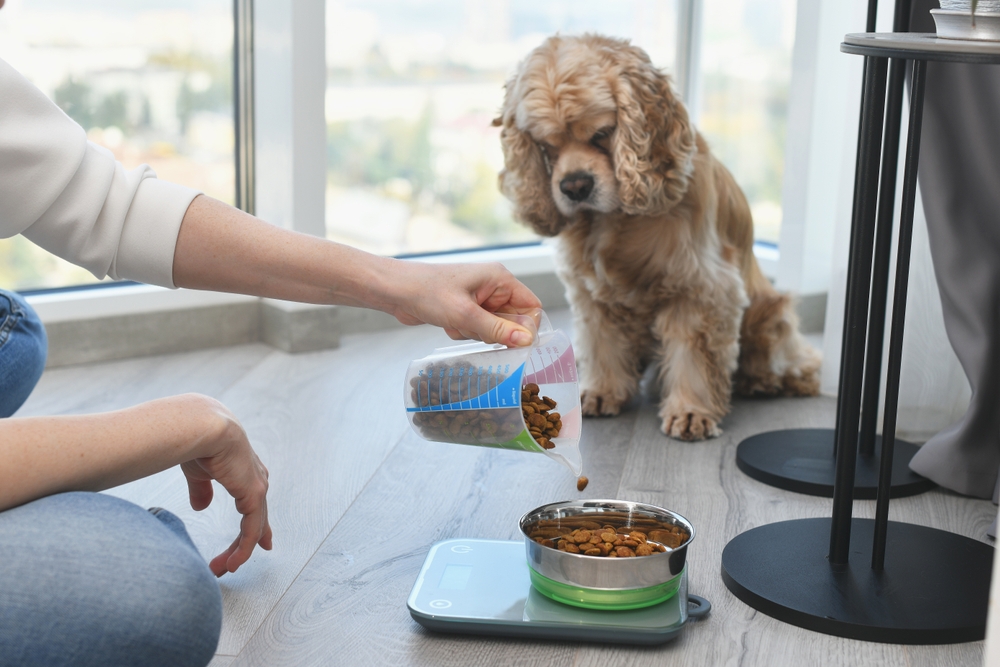
Portion guidelines recommend measuring every meal accurately. Estimating with a scoop typically leads to consistent overfeeding over time. A calorie calculator helps estimate daily needs based on size, age, and activity level. Bag labels tend to suggest generous feeding ranges, so the calculator usually produces a more accurate starting point than the recommended cup amounts.
Avoid all-day grazing. Cats who free-feed tend to overeat and are harder to keep at a healthy weight. Measured meals on a consistent schedule make intake visible and management possible. For households with multiple pets, separate feeding areas prevent the dominant eater from finishing everyone else’s bowl, which is a common silent contributor to weight creep.
For cats who are calorie-restricted, never allow complete food refusal beyond 48 hours. Cats who stop eating develop hepatic lipidosis, a serious liver condition, quickly. Let us know if your cat refuses to eat during a dietary transition.
Prescription vs. Over-the-Counter Options
Choosing pet food for a weight management goal is different from choosing everyday maintenance food. Fiber in weight loss diets contributes meaningfully to satiety, helping pets feel full on fewer calories. Prescription weight-loss diets undergo controlled feeding trials to confirm they deliver safe fat loss while preserving lean muscle, which over-the-counter options do not consistently achieve.
Our team can recommend the most appropriate option based on your pet’s current body condition, health status, and weight loss goals.
How Do Treats Fit Into the Calorie Count?
Treats count. Every bite that passes your pet’s lips adds to their daily calorie total, and treat calories are the single most common reason weight management plans stall.
A good general rule is to keep treats under 10 percent of daily calories. For a 20-pound dog eating around 400 calories a day, that is only about 40 treat calories, which is a tighter budget than most families expect. A single large biscuit can easily hit 60 or 70 calories on its own, and a typical dental chew or bully stick can run anywhere from 50 to 150 calories. Add a spoonful of peanut butter in a Kong, a few training rewards, and some table scraps across the day, and you can blow past the treat allowance without anyone realizing it.
Anything that counts toward the daily total:
- Training treats and commercial pet treats: even the tiny ones add up when used across multiple sessions
- Dental chews, bully sticks, and long-lasting chews: check the label or ask us, as these are often surprisingly calorie-dense
- Peanut butter, cream cheese, or yogurt in puzzle toys: a tablespoon of peanut butter is about 100 calories
- Table scraps and human food bites: a piece of cheese, a bit of meat from dinner, a lick of ice cream
- Food used to hide medications: pill pockets and cheese cubes still count
Aim for lower-calorie treats at 3 calories or fewer per piece for small dogs and cats, and no more than 10 to 15 calories each for larger dogs. Single-ingredient options like small pieces of cooked plain chicken breast, freeze-dried lean meat, green beans, baby carrots, and a few blueberries are satisfying without the calorie density of commercial biscuits.
Non-food rewards are often the easiest fix of all. Most dogs are just as motivated by a quick game of tug, an excited “good boy,” a favorite squeaky toy, or a few minutes of praise and scratches. Those rewards carry no calories and work just as well for training.
Making Weight Loss Work at Home
Dog weight loss combines gradual calorie reduction with increasing exercise. Start with short, frequent walks and build duration slowly over weeks. Consistent activity supports both fat loss and muscle preservation. Swimming and controlled fetch are great lower-impact options for dogs with joint concerns or heavier starting conditions. Slow-feed bowls or spreading food across a snuffle mat extends mealtime for fast-eating dogs, reducing consumption speed and supporting satiety.
Cat weight loss requires creativity. Multiple short play sessions that mimic hunting, interactive feeders, puzzle feeders, and vertical territory that encourages movement all build activity into daily routine without the off-switch problem cats present when asked to “exercise.”
When Weight Change Points to a Medical Problem
Weight gain or loss that does not respond to dietary changes, or that is unexplained, should prompt medical evaluation. Conditions that alter metabolism or nutrient processing include:
- Hypothyroidism: weight gain, low energy, and coat changes in dogs
- Cushing’s disease: increased appetite, pot-bellied appearance, and fat redistribution
- Feline hyperthyroidism: weight loss despite ravenous appetite in older cats
- Chronic kidney disease: gradual weight loss and muscle wasting in senior cats
- Cancer: systemic weight loss before other signs develop
Our diagnostics include in-house bloodwork, urinalysis, and imaging to identify or rule out medical contributors to weight changes, often with same-day results so the next steps can be discussed during the same visit.
Body Condition Across Every Life Stage
Needs shift continuously. Puppies and kittens need calorie-dense food for growth but can develop unhealthy weight patterns or orthopedic problems if overfed early. Adults need maintenance diets that match activity level. Senior pets often lose muscle even as fat increases, requiring nutritional support that preserves lean mass. Seasonal changes in activity also require alterations in calories.
Illness and recovery also temporarily shift what “ideal” looks like. After a serious illness, your pet may need calorie support rather than weight management until they have recovered fully.
Frequently Asked Questions
How fast should my pet lose weight?
Slowly. Aim for consistent small weekly losses rather than rapid change. Rapid weight loss in cats specifically carries serious health risks. Our team can set a specific target based on your pet’s starting point.
Can my pet still have treats?
Yes, in moderation. Count treats toward the daily total and keep them to less than 10 percent of daily calories. Lower-calorie options, or play-based rewards, reduce the impact on weight management goals.
Do I need to change the food?
For significant weight loss goals, often yes. A diet formulated and tested for safe fat loss while preserving muscle consistently outperforms reducing portions of a maintenance diet.
Do dental chews and bully sticks count as treats?
Yes. Many are surprisingly calorie-dense, often 50 to 150 calories per piece. If your pet has one every day, it belongs in the treat budget along with everything else. Check the label or ask us at your next visit if you are not sure how a particular chew fits.
Why isn’t my pet losing weight despite cutting back on food?
The most common culprits are uncounted treats, table scraps from other members of the household, or free access to another pet’s food. A medical condition like hypothyroidism in dogs can also slow weight loss. A recheck visit with bloodwork helps identify what is happening.
Starting Where You Are
Body condition at any given moment is just a starting point, not a verdict. At Animal Hospital at Hillshore, our team brings genuine care to every conversation about your pet’s weight and nutrition, without judgment and with practical next steps that fit your actual life and household.
Book an appointment to schedule a body condition assessment and get a realistic plan in place for wherever your pet is starting from.




Leave A Comment